



Photo by Richard Hurd
Metro Metrics August 2026

Metro Metrics August 2026

Metro Metrics is a monthly data snapshot that explores key economic indicators reflecting the health of the Madison metro economy.
Tracking Madison’s AI Readiness
Last July, Brookings Institution released a report mapping the AI economy, tracking and categorizing how prepared metropolitan areas are to participate and benefit from the growth of AI. Using 14 measures and three categories (Talent, Innovation and Adoption), Brookings grouped metros into six tiers: Superstars, Star Hubs, Emerging Centers, Focused Movers, Nascent Adopters and Others.
The Madison Metro placed in the “Emerging Centers” tier, ranking in the top 10% of all metros. Madison ranked in the top 25% of metros in both Talent and Innovation and in the middle 50% for Adoption. That distinction points to both opportunities and challenges for the region.
This month’s Metro Metrics takes a deeper dive into this report and other indicators that assess our region’s AI readiness.
Innovation
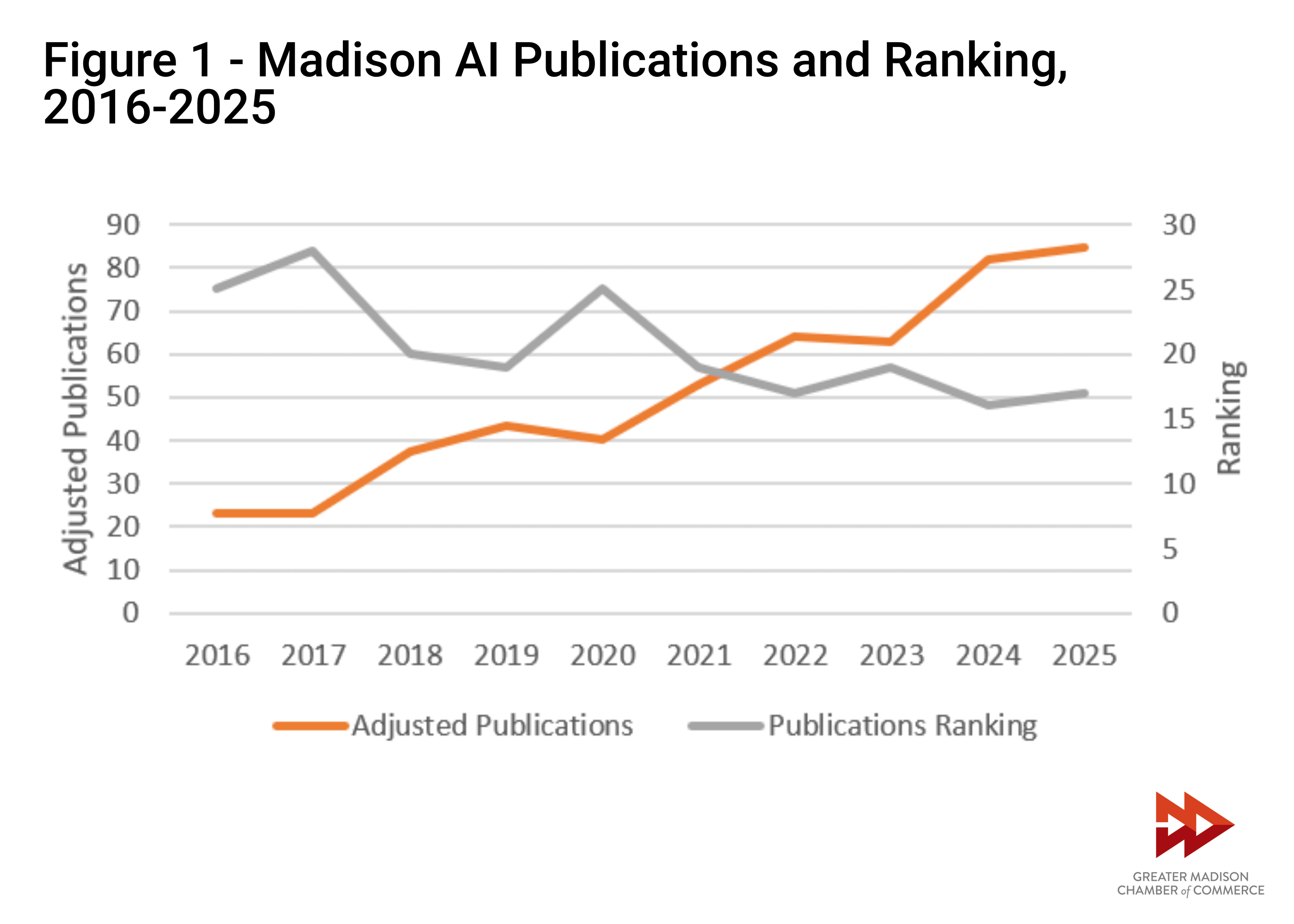
One source that Brookings used to assess AI innovation was airankings.org, a publication-based index of AI research activity. This data shows that AI-related publications out of UW–Madison have been increasing over the past decade, which had a corresponding increase to Madison’s placement among all U.S. cities. Since 2021, Madison has consistently ranked among the top 20 cities in the nation for AI publications, with more than 80 adjusted publications coming from UW–Madison in 2024 and 2025. The overall number of adjusted publications increased 60% from 2021-2025 (Figure 1). This trend reinforces the region’s advantage of having a major research institution advancing AI talent and expertise.
Talent
One metric that Brookings used to measure a metro area’s AI talent is the number of individuals with a bachelor’s degree in computers, mathematics, statistics or engineering. This is measured using data from the American Community Survey, 1-year estimates, which excludes 2020 due to that year being a decennial census year.
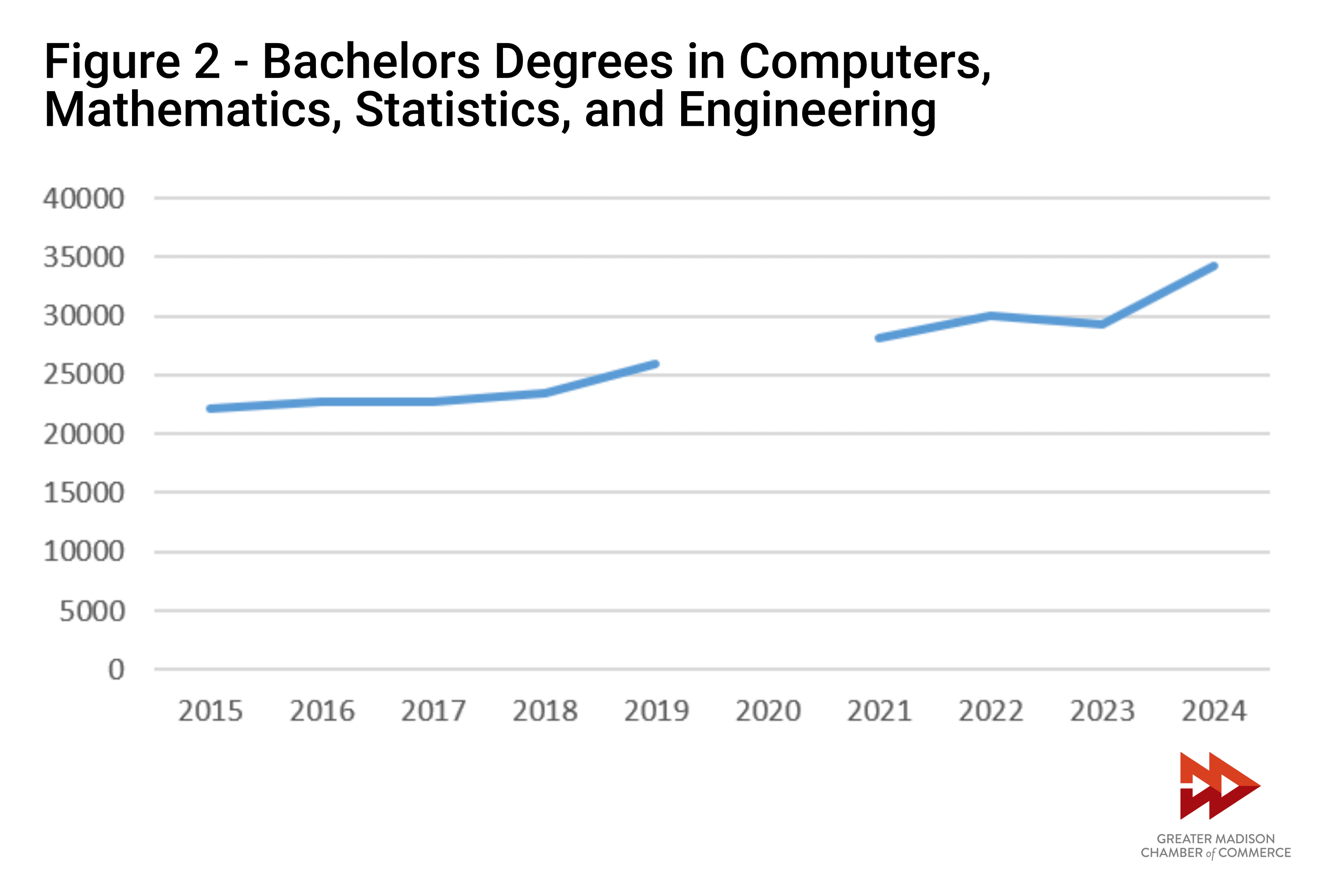
Over the past decade, the number of people living in the Madison Metro with these degrees grew by 55%, compared with 36% growth in the metro’s overall population of college graduates. This indicates that AI-ready college graduates are a growing part of the metro’s workforce. This trend has continued since the Brookings analysis was published with the number of these graduates living in the Madison Metro growing by about 17%, from 29,229 to 34,311 (Figure 2).
AI Adoption
The region’s greatest opportunity for improvement in AI readiness is adoption. The Madison Metro ranked among the top 25% of US metropolitan areas in AI talent and innovation, but only in the middle 50% in AI adoption. This means that to increase our standing from an Emerging Center to a Star Hub, the Madison Metro must create stronger pathways from research to commercialization and enable broader AI adoption across existing business and new startups.
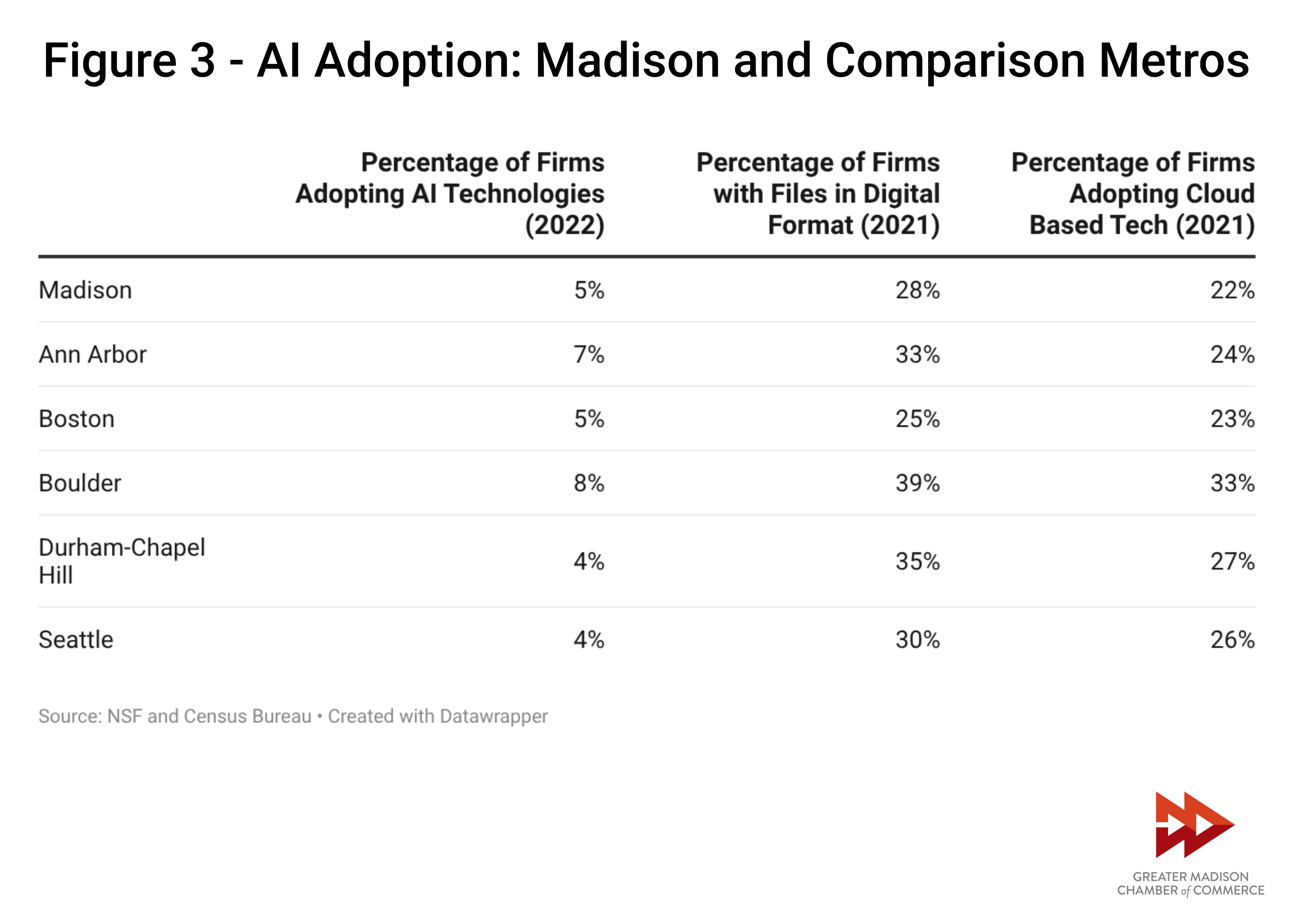
Annual Business Surveys published by the Census Bureau and the National Science Foundation from 2021 and 2022 provide data on the digitization and AI adoption of firms by metropolitan area. It shows that the adoption of AI among Madison businesses was within a few percentage points of comparable tech-based regional economies (Figure 3).
The Greater Madison Chamber also collects data through a coordinated annual regional employer survey. This data tells us that the metro’s AI adoption has significantly increased since the Brookings report was published last year. In the 2024 survey, nearly half of all employers indicated they were not using AI in any capacity. Last year, the proportion of businesses in the region intentionally using AI increased to roughly 80% of respondents. While AI use increased, the application remained minimally integrated into business
Ultimately, the more AI-ready a metro is, the more likely it is to benefit from productivity gains and economic activity. While the region has many of the key ingredients needed, including research capacity and talent, converting those assets into business adoption will improve our readiness. This year’s edition of the Next Normal survey, which will be in the field in September, will provide updated data points on how quickly AI use has accelerated.
Images