
Photo by Richard Hurd
Metro Metrics October 2026

Metro Metrics October 2026
Metro Metrics is a monthly data snapshot that explores key economic indicators reflecting the health of the Madison metro economy.
A Deeper Dive into the Next Normal (N²) Regional Employer Survey
Last month, the Greater Madison Chamber of Commerce, in coordination with key public- and private-sector partners, distributed the 2026 Next Normal (N²) Regional Employer Survey. The survey provides valuable insights, helping inform collective efforts to strengthen our regional economy.
Now in its third consecutive year, we can look beyond a single point in time and assess long-term trends shaping the region.
Survey Demographics
The composition of survey respondents remained largely consistent with the previous two years, providing a useful foundation for year-over-year comparisons, with one notable exception. For the first time, Forward Janesville, Inc. and the Greater Beloit Chamber of Commerce partnered in designing and distributing the survey. Thanks to their efforts, nearly a quarter of respondents represented Rock County employers, compared with 3% last year.
While the geographic concentration of responses had some variation, the responses were largely consistent on most topics, regardless of the county of origin, highlighting the shared opportunities and challenges facing businesses throughout the region.
Business Indicators
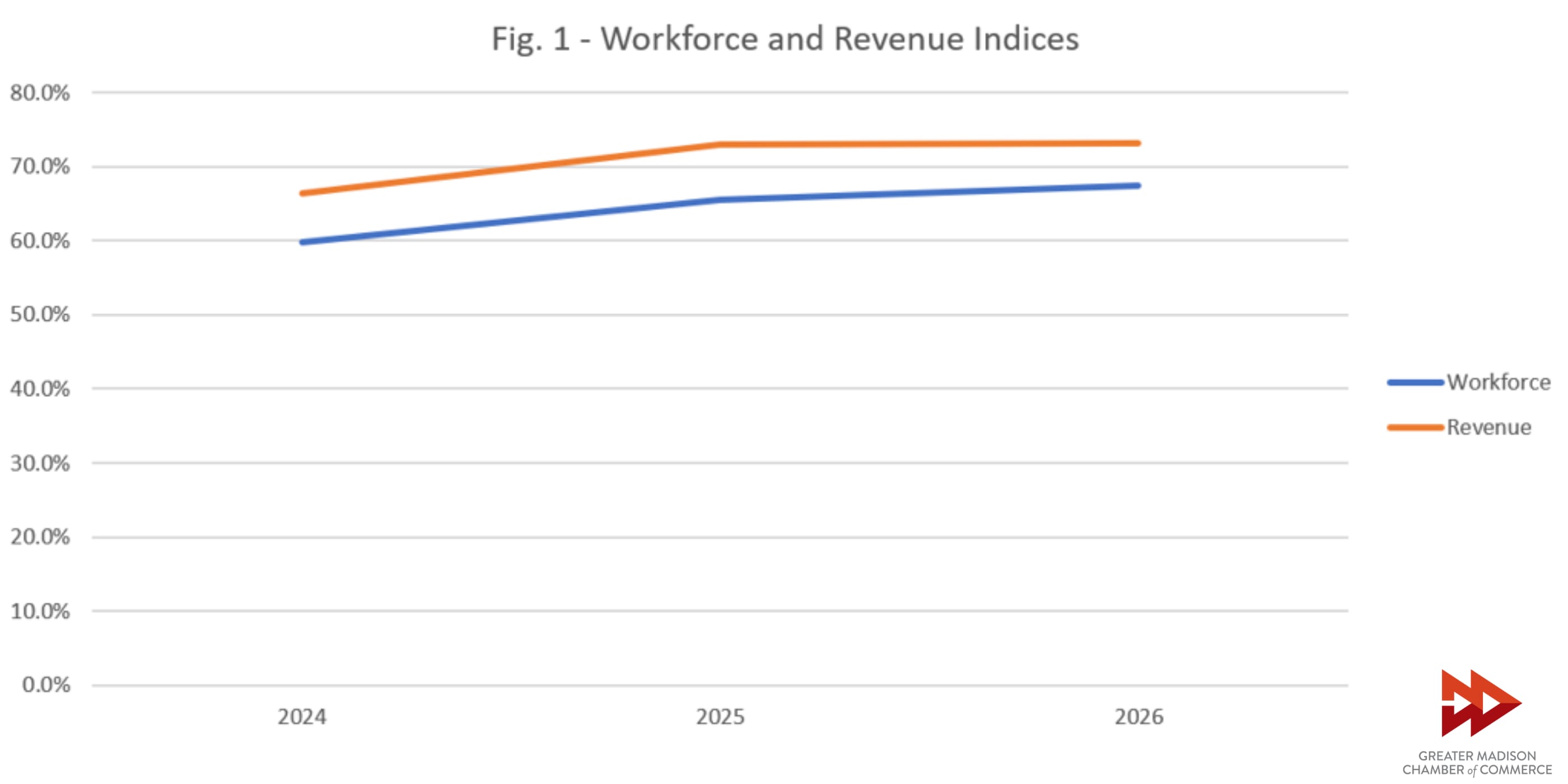
The overall business outlook remains positive, with 92% of employers reporting stable or growing workforces and 81% reporting stable or growing revenue. With three years of data, we can track changes in business performance over time. Using responses, we constructed workforce and revenue indices to measure the balance between employers reporting increasing and those reporting decreases. A number above 50% on the index indicates that more employers reported growth than contraction, while a number below 50% indicates the opposite.
As shown in Fig. 1 below, both indices increased from 2024 to 2025 and again from 2025 to 2026. This suggests a strengthening business environment, with the balance of responses shifting increasingly towards workforce and revenue growth.
Business Barriers
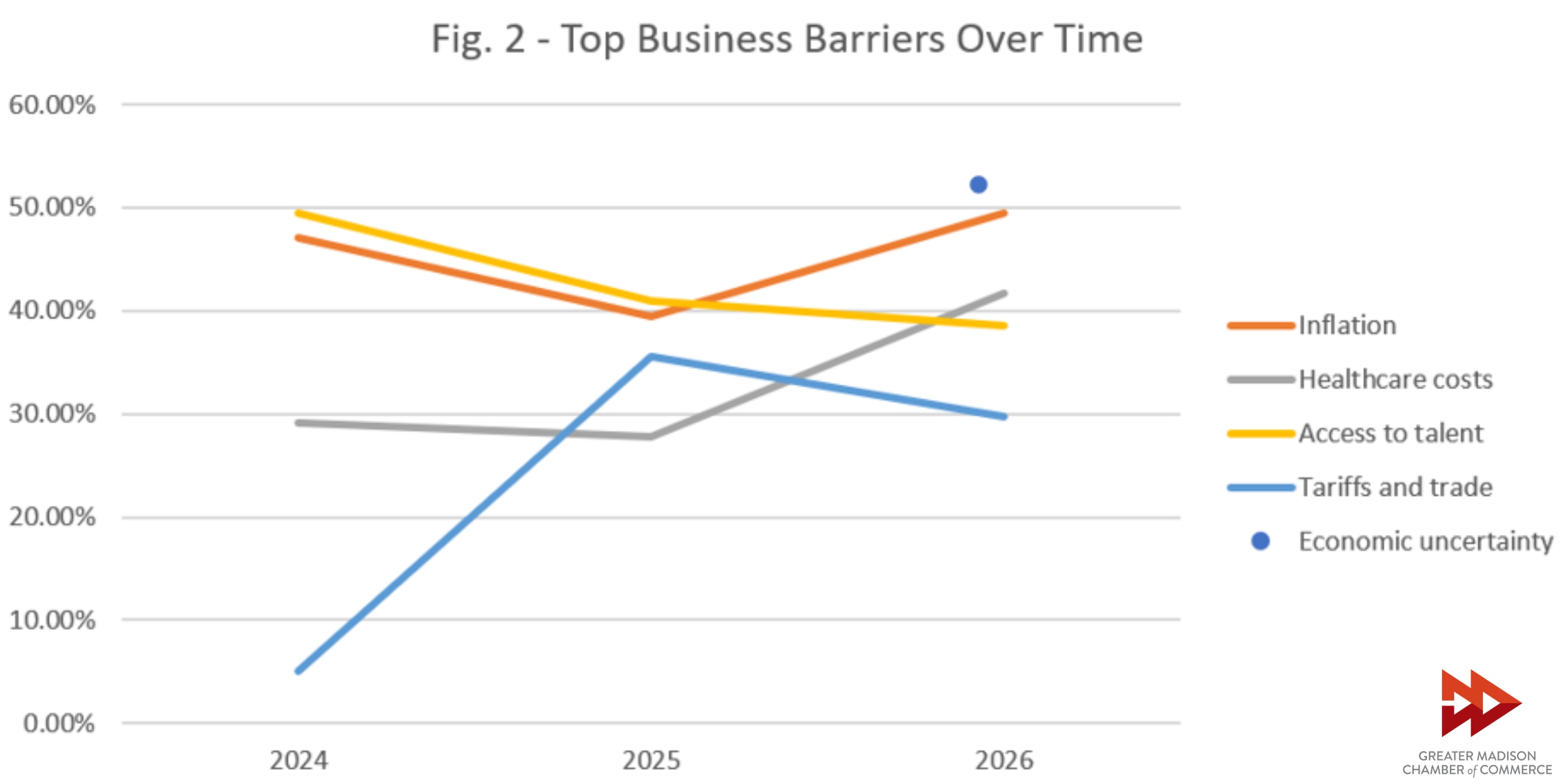
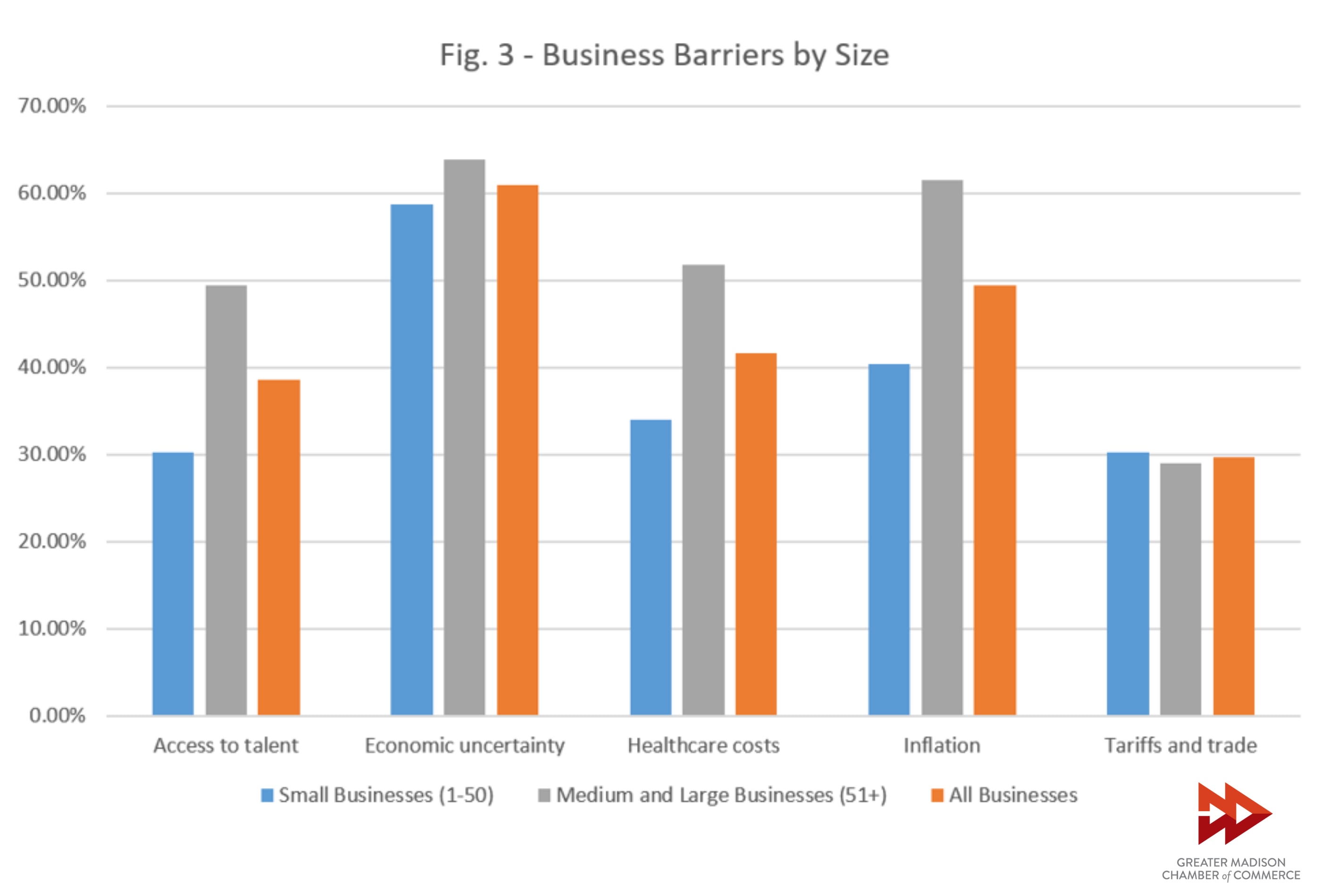
Each year, the survey asks employers to identify the biggest current barriers to their businesses. This year’s results reinforce a recurring theme that despite local optimism, some of the most significant economic headwinds stem from national issues, including inflation, health care costs, tariffs and trade policy. The top barrier, economic uncertainty, was a new survey option added this year after the 2025 survey found that about half of employers were experiencing greater economic uncertainty than the prior year.
Fig. 2 illustrates how these concerns have evolved over time. Access to talent, the sole regional challenge among the top five barriers, notably decreased since 2024. This slight improvement is an encouraging signal for the region’s talent pipeline, particularly amid findings of increased employer engagement with local educational institutions and training programs. However, it remains an important challenge requiring continued coordinated action.
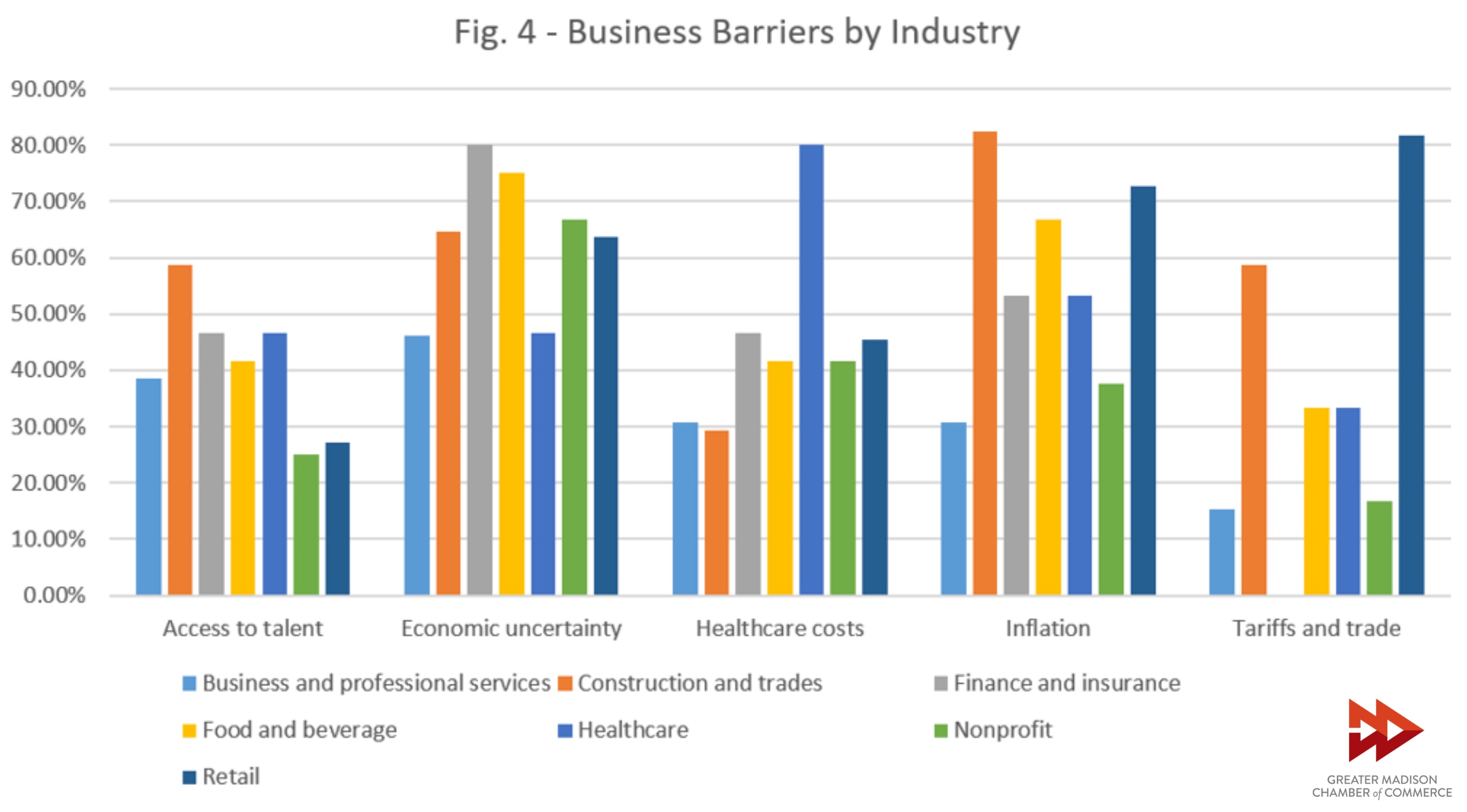
A breakdown of barriers by industry (Fig. 4) reveals additional differences. Construction and trades, along with retail, report strong pressures from inflation and tariffs. Meanwhile, health care employers expressed slightly less concern about economic uncertainty but greater concern about healthcare costs.
AI Use
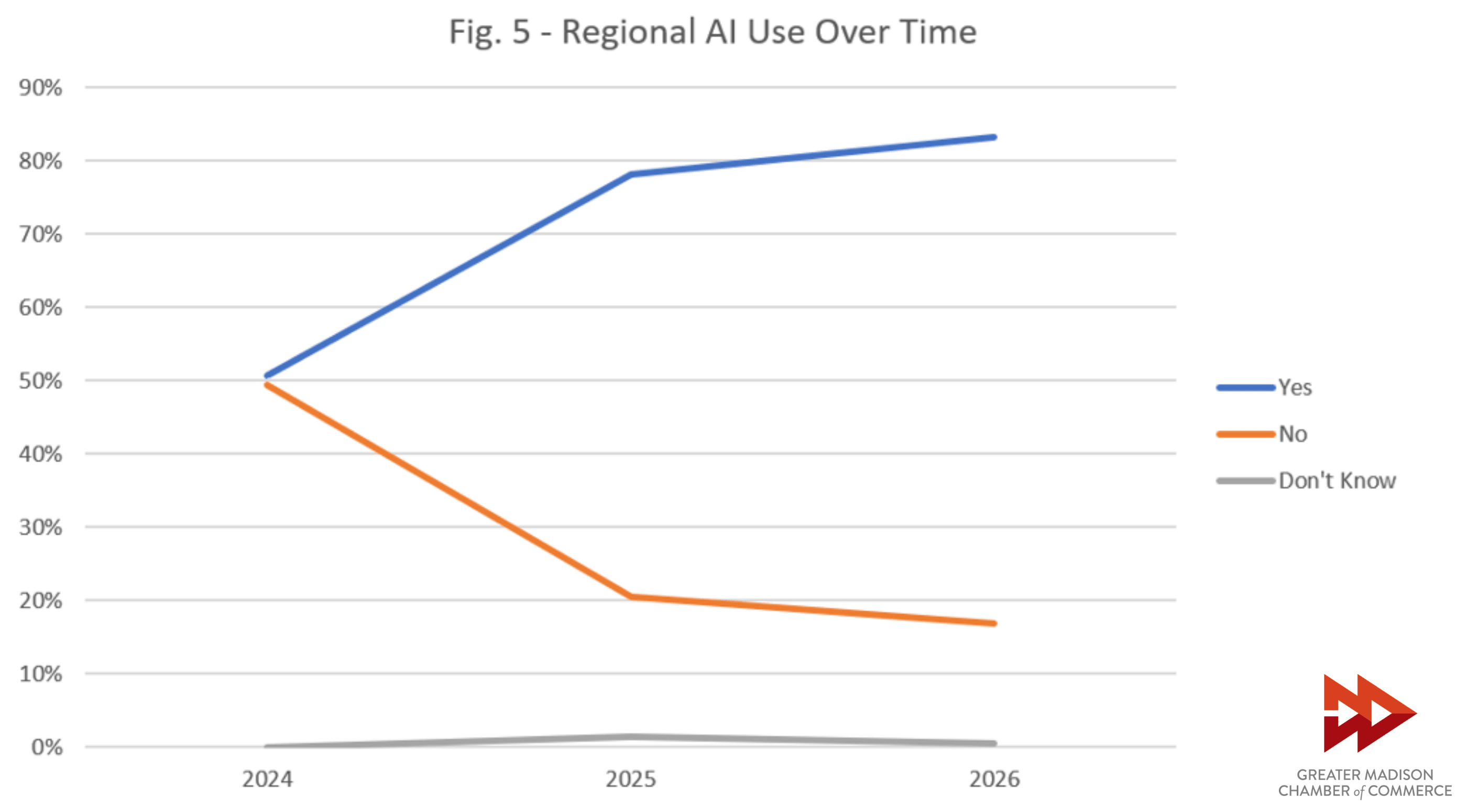
Another important metric tracked by the N² survey is AI adoption. In 2024, roughly half of employers reported intentionally using AI. That figure jumped to nearly 80% in 2025 and increased again to 83% in 2026.
While employer adoption continues to rise (Fig. 5), deeper operational integration has lagged. In 2025, 58% of businesses said that AI was “minimally integrated” into their workflows. This year, the number was 54%.
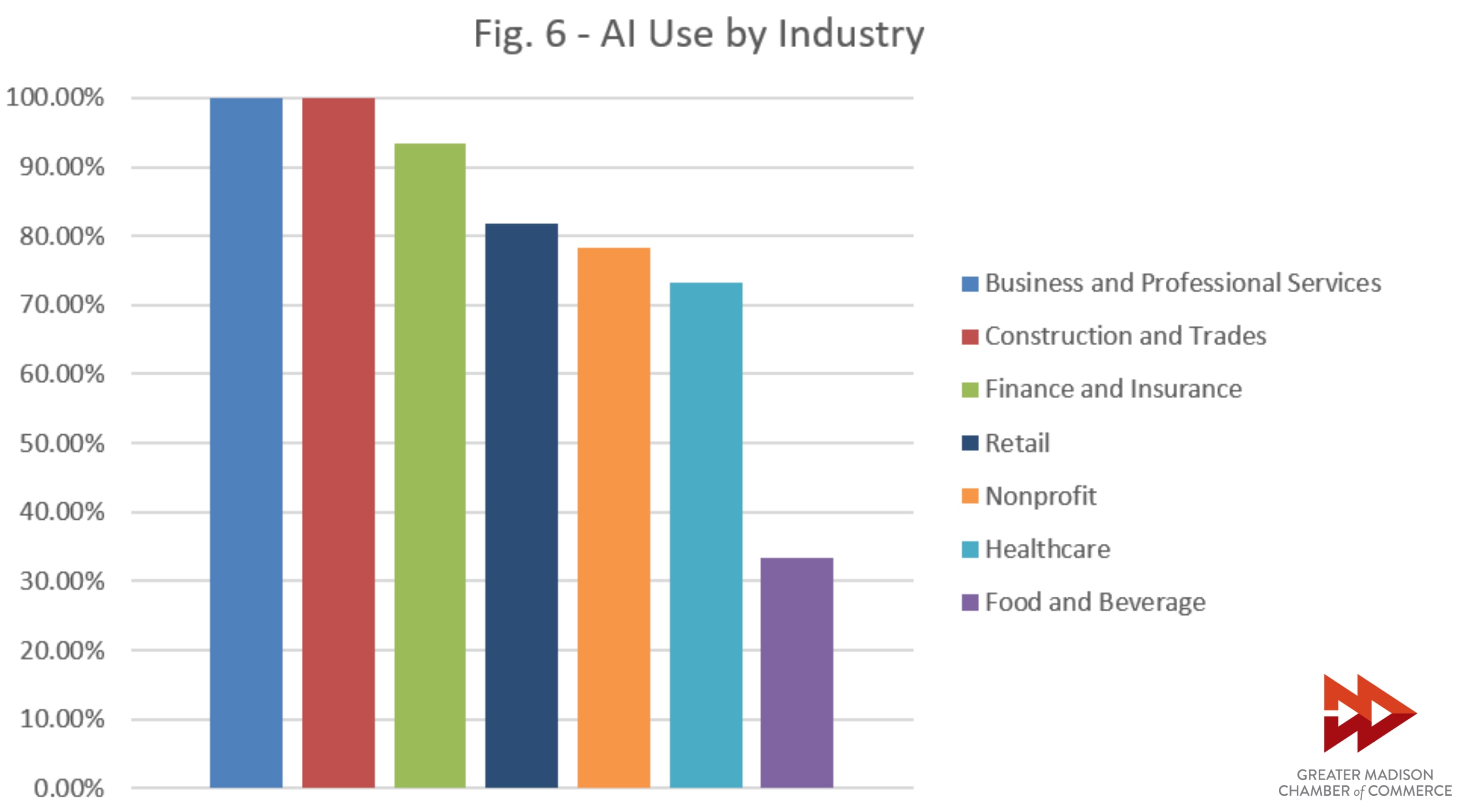
When examining AI use by industry (among industries with 10 or more responses, Fig. 6), all responding employers in the business and professional services and construction sectors reported using AI, compared to just one-third of food and beverage respondents.
The most common uses of AI were for administrative support (72%), content creation and design (66%), business analytics (57%), marketing and advertising (54%), research and development (33%), and automation (31%). Among respondents who said they did not use AI, the most cited reasons were privacy and security concerns (48%), a perceived lack of applicability to their business (48%), environmental concerns (39%), concerns about bias (32%), and perceptions the technology is not sufficiently mature (23%).
Conclusion
Across three years of survey results, a consistent picture of the regional economy is emerging. Employers remain optimistic about their business outlook, even as national economic pressures create uncertainty. Access to talent is improving, while emerging technologies such as AI are increasingly becoming part of everyday business operations. Together, these trends highlight both the region’s economic resilience and the importance of continued collaboration to sustain its competitive advantage.
The N² Workgroup includes the Capital Area Regional Planning Commission, City of Madison, Destination Madison, Downtown Madison Inc., Forward Janesville Inc., Greater Beloit Chamber of Commerce, Greater Madison Chamber of Commerce, Madison Area Builders Association, Madison Black Chamber of Commerce, Madison’s Central Business Improvement District, Madison Gas and Electric Company, StartingBlock, University Research Park, Urban Land Interests, and Workforce Development Board of South Central Wisconsin.
For questions on this data or the N² survey, contact Policy & Research Manager Chris Zurfluh (chris@madisonbiz.com).
Images